November 11, 2023 Veteran’s Day – a Special Tribute

I’ve decided to dedicate a post to Veteran’s Day as our autumn trip to Normandy certainly made for an appropriate segue.  In France and Great Britain, November 11th is heralded as Armistice Day including a moment of silence at 11:00 a.m. followed by ceremonies across the country to commemorate those who fell during WW I and II.

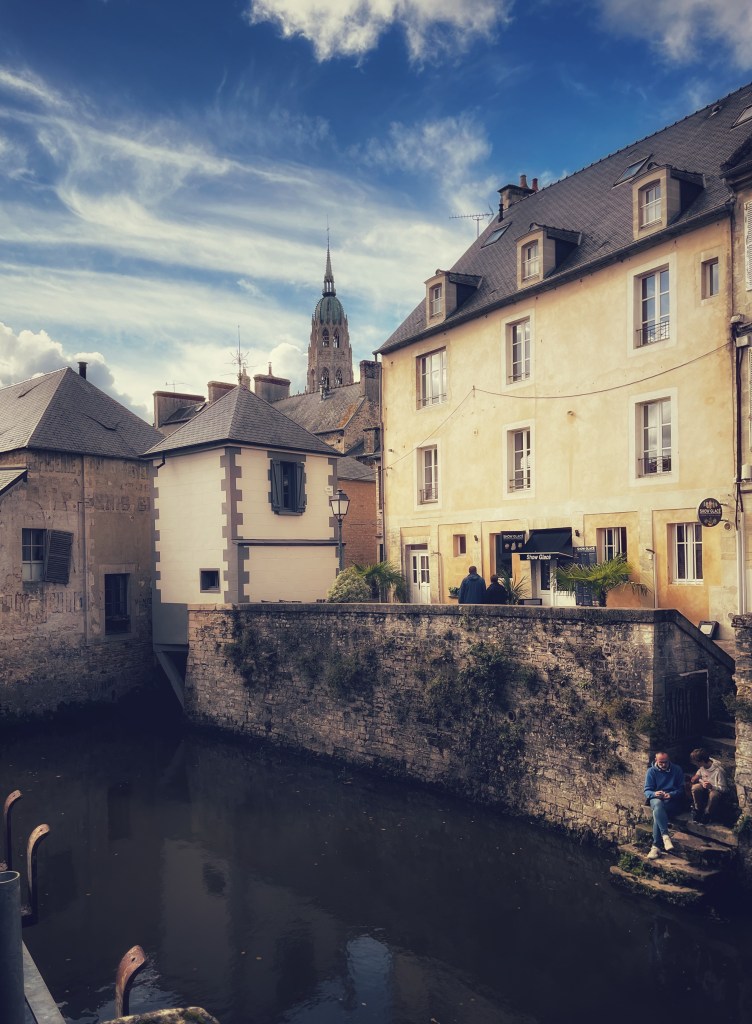
We motored by way of Tours to Bayeaux which is a lovely town with a stunning cathedral not far from the beaches of Normandy; we had a superb lunch in the town center, spending time pondering how much of this village was ravaged during the war.  Thankfully, the cathedral had managed to survive, but we saw old buildings fused to new construction; you can always tell the difference despite the surprisingly authentic materials used here for new builds. 

Driving through the Norman countryside we encountered classic French farms with cows, sheep and plowed fields; lovely hedgerows where so many skirmishes were staged during the war now housed birds and hedgehogs going about their daily business.  The architecture of Normandy is tall and rather boxy with roofs made of slate.  There is a distinct absence of the channel terracotta roofing tiles and pigeonniers so common to the south of France.  Though Colombage homes (the architecture of our house) are popular in this area we didn’t see much which was surprising; I suspect they are further north.

All around us there was peace and calm, much like Pearl Harbor and Gettysburg so you have to summon the ghosts to get clarity on the carnage; the pain, the sacrifice…the horror.  

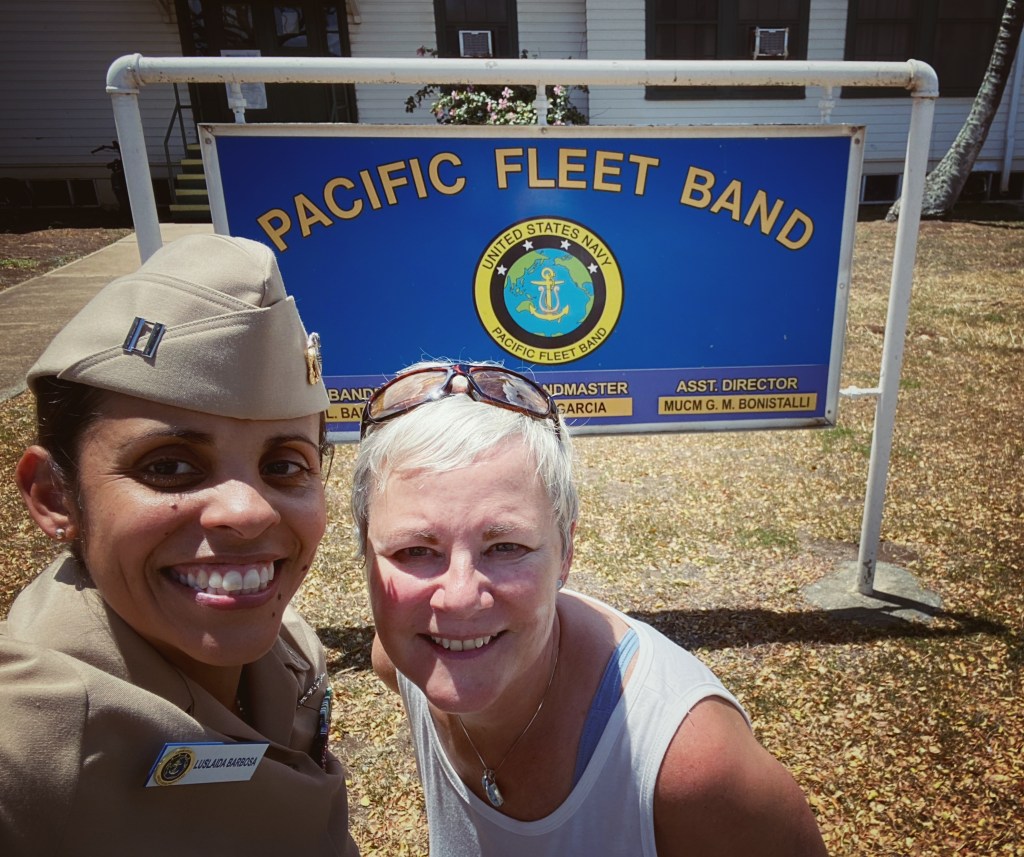
Upon reflection, in 2022 and into 2023, we have visited many significant war memorials ranging from Pearl Harbor, Gettysburg, Arlington Cemetery, the Washington DC War Memorials and now Normandy, France.  Oh…and let’s not forget Window Rock, AZ, home of the Navajo Code Talker Memorial; they were a significant force in winning the war in the Pacific.  

Having made these efforts to explore such significant history, we have now truly internalized and echo the sentiment that “Freedom is not Free.” 

Lest we forget #pearlharbor #navajocodetalkers

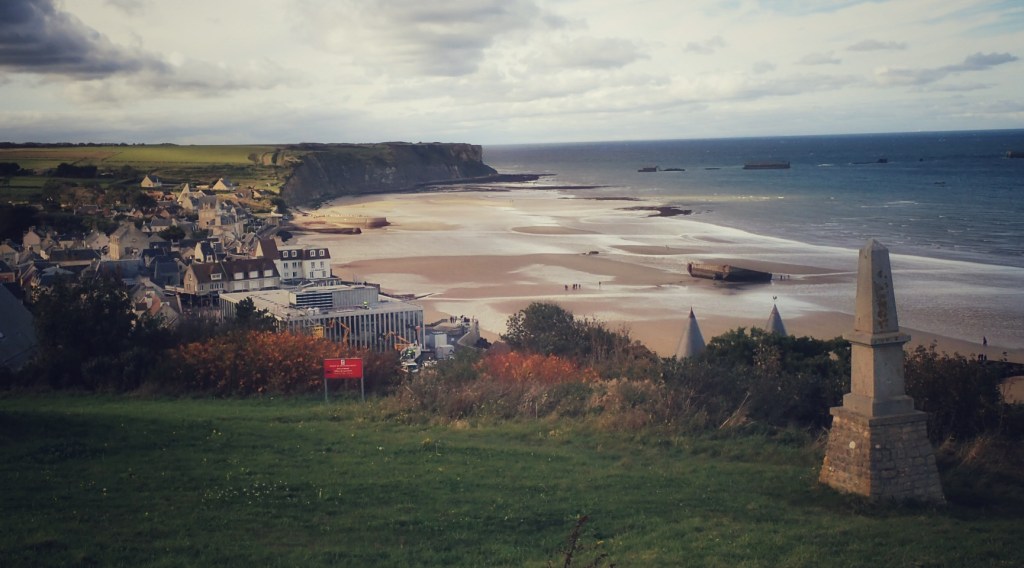
Upon our arrival to the seaside, we found that Omaha beach and the surrounding cities are atypical coastal towns that, aside from the architecture, reminds me a lot of the Oregon coast with children playing on the beach like they would anywhere else. I enjoyed a mostly solitary stroll along the boardwalk, enjoying the sea breezes, the sway of the ocean and pondering the newer-build oceanfront villas. 

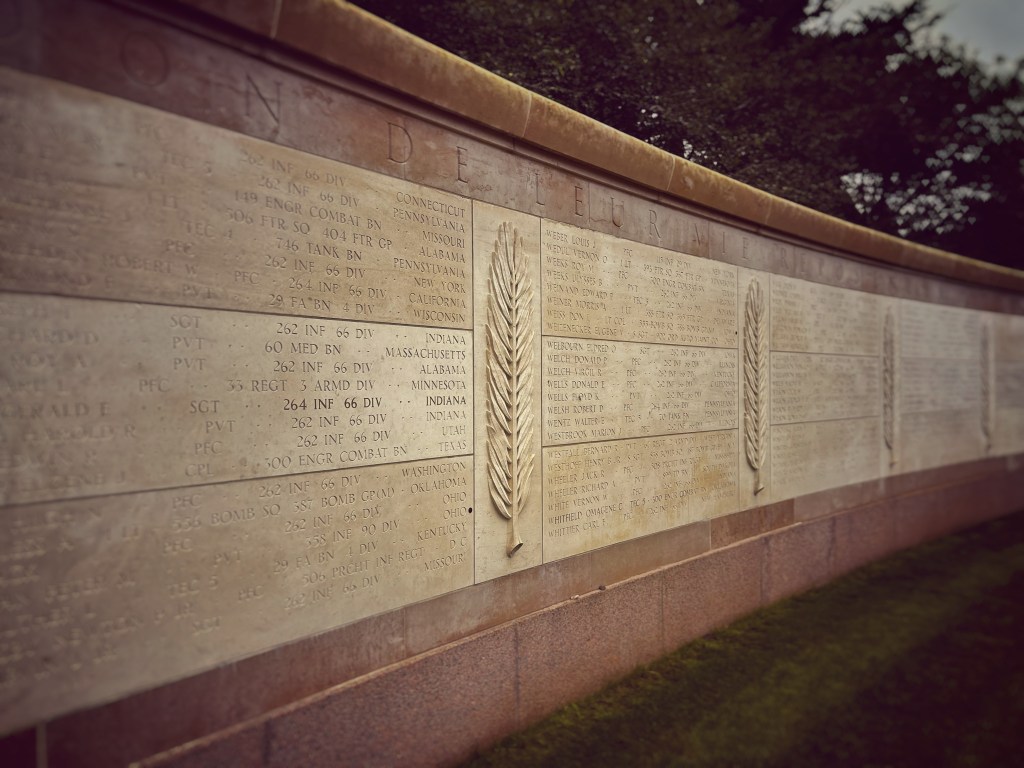
The American Cemetery turned out to be pretty busy, and I was surprised at how many families along with their school-age children were there; it turns out they were on school holiday – one of the many that French children enjoy!  Being off-season it was both surprising and comforting to see so many people from different nationalities attending.  It was endearing watching the French families educating their children on the history of this place and pointing to the signs to be quiet and reverent; France was after all front and center during the war. 

The solidarity here is palpable as you overlook the sea of crosses that seem as though they were placed just yesterday; pristine white as if they are lovingly polished on a daily basis. As we were later in the day we witnessed the lowering and folding of the flags, followed by taps which – as always – causes you to internalize the grief of the profound sacrifices made during D-Day and the ensuing months.  As my father was a WWII vet (the Pacific) I always have to fight the tears.  

Taps

Most of the cemetery is roped off, but you are allowed a smaller section to wander through the maze of tombstones, reflecting on these warriors, some who couldn’t even be identified; we asked ourselves – were they obliterated by a bomb?  Argh.  Though it would have proven too burdensome to ship so many remains back to America, over the decades most of these soldiers will be forgotten, yet, their legacy will remain for generations to come.  

American Cemetery – Normandy Beach

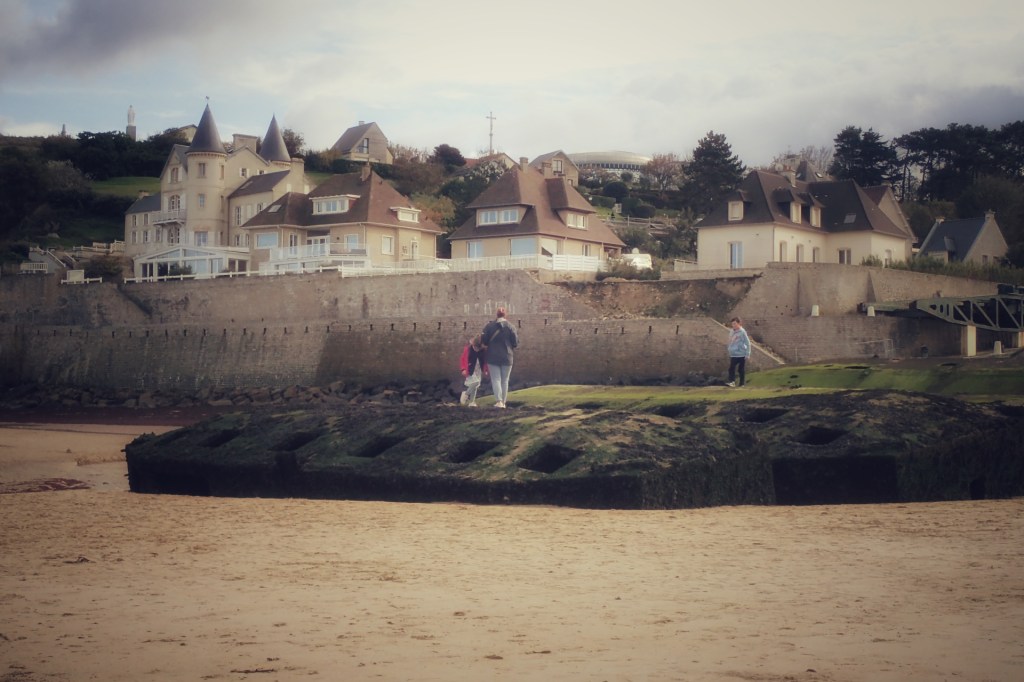
The next day proved to be sunny and milder, but windy as we ventured to Gold Beach where the British and Canadian forces teamed up as part of Operation Overlord.   They had constructed the “Mulberry B Artificial Harbor”  just offshore that included “floating bridges” for the transport of vehicles and materials needed for the incursion.  The remnants of the harbor are still visible during low tide. This operation was an astounding achievement of engenuity that is difficult to wrap your head around.  And when you think that they didn’t have the resources that are available today, you can only marvel at the genius on display.  It turned out to be a massive success, but not without a horrendous loss of life.  

https://www.dday-overlord.com/en/media-library/photos/gold-beach/mulberry-b

We wandered around the beach peeking into the rusted remains of the bridges then headed to the village for a chocolat chaud.

It should be noted that all along this region of Normandy there are American, French, British and Canadian flags flown in solidarity; it gave me more comfort than the hot chocolate! 

Sculptures at Gold Beach
Our next stop was the Bayeux Commonwealth Cemetery – equally, if not more heartbreaking, than the American one because you are not overwhelmed by the scale but by the intimacy. Due to the proximity to England I’m sure the British families wanted the bodies of their fallen to come home for a proper burial, but for those who remained the cemetery has proven to be a touching memorial that perhaps the families felt would give their beloved relatives an enduring legacy. 

The memorial feels more like an English garden with roses still blooming around the headstones; they show the regiment with its accompanying symbol pain-stakingly carved into it followed by…this is the crippler…the name and age of the deceased.  We saw several that were 19 or 20 years-old, some headstones fused to one another as they had died together.  In addition to the British and Canadian graves, we saw Polish, Jewish, Arabic and one section dedicated to German soldiers.  Like the American Cemetery, there were those that could not be identified. 

Many of them had June 6th inscribed on them, then you would see post D-Day dates that stagger through August 1944; you really get a sense of the incursion beyond the initial launch of Operation Overlord.  

Bayeux Commonwealth Cemetery

Subconsciously we knew that the majority that died were so young, but this memorial made it visceral.

As it is a Commonwealth Memorial I suspect it isn’t as frequented as the American Cemetery, but I encourage anyone who takes the time to come to this region of France to spend some time here as it’s in Bayeux. There is a lot to process here – it is a profound experience that you will not soon forget.

Thankfully we have “Saving Private Ryan” and the “Band of Brothers” along with a long stream of war movies to help us get a real sense of what it must have been like.  

On a more recent note, I was curious as to why there was a fair amount of indictment against the movie “Lone Survivor” about Marcus Luttrell and the failed Seal Team mission in Afghanistan to hunt down a notorious Taliban leader; it seemed as though some viewers could not suspend their disbelief at the validity of the story and that it was just a Hollywood propaganda movie. I once had the privilege of working for an ex-Navy Seal who had been in covert ops (can’t imagine what his duty was!).  Despite his level of intensity, I found I could have very grounded conversations with him.  I had asked him about the movie and the response from IMDB, he smirked and let me know yes – it’s all true; most people cannot imagine that anyone would make that level of sacrifice.  He also went on about how he couldn’t understand why so many incredibly fit recruits dropped out of Seal training; about how others who may not appear resilient but are incredibly so.  What is the secret sauce?

I wish I knew the answer to his question, but I do know that those that have gone through extreme levels of adversity, as I have found in much of the refugee communities I have dealt with, have cultivated a level of resiliency and humility that is lacking in so many western societies today.  

With all our modernization and freedoms, we have become complacent in so many ways, and perhaps we need better immersion into the adverse aspects of life to build the resiliency and humility of future generations.  Especially after witnessing French parents actively teaching their children the significance of the seemingly endless sea of crosses that fanned out before them; that the beaches of Normandy weren’t always about bucolic summer breezes and building castles in the sand. 

All the memorials we have visited were a sobering experience: If it weren’t for these brave souls making the ultimate sacrifice, I wouldn’t be enjoying the privileges I do now; the memorials are truly inspiring and should not be left to a mere documentary on Netflix.

They leave you with a profound sense that war is truly hell, but sadly we never really seem to learn the lesson. #neverforget 

June 5 – 8 The Yukon to Skagway along the Klondike Highway

After leaving Tok (the Tok RV Park is great and we were nestled amongst the pines) We made it across the border but not before spotting a juvenile caribou on the side of the road.  He was freaked and froze in front of us before sprinting off to find his mother.

Little dude!

The RV traffic had picked up dramatically and we kept seeing the same caravan of three RV rentals being driven by Germans.  We seem to encounter a fair amount of Dutch and Germans. 

The frost heaves started not long after we left Tok – we were anticipating them this time. The “perma” in perma frost isn’t so permanent as the pavement gives way as the ground softens.  There are times on the Alaska Highway that you would expect the oxygen masks to fall if you were on an airplane.  Being in a higher profile vehicle only exacerbates the rumpy-bumpy ride.  

The wildflowers were in bloom and we even drove through a “pollen storm” – like a dust storm but it was orange-yellow pollen coming off the deciduous trees; the road was layered in it.  

We were curious to see how much had changed since we went through this area two weeks ago.  The Yukon Discovery Lodge was busy though they ran a generator all night as they had no other source of power.  Such is life in this part of the world.  

We left the next morning as the sun was rising over the nearby ridges.  Fog emerged from the valley and we had a clear view of the Kluane Range that had been socked in on our way up.  We witnessed massive icefields running vertically from the sides of peaks – amazing stuff.

We passed marshes and ponds with migratory birds including Trumpeter Swans;  one pond had two swans surrounded by ducks as if they were gathered to admire their magnificence. Unfortunately there wasn’t room to stop and enjoy the scene.  

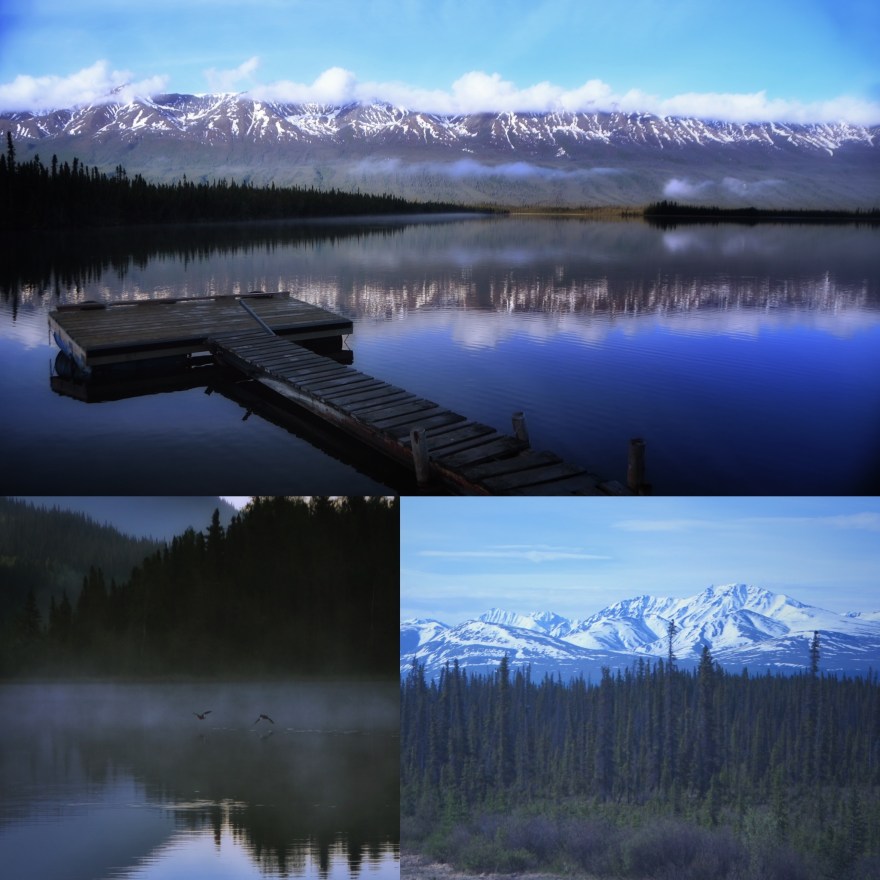
We swung by Pickhandle Lake as the mist rose and the loons were making their way across the water.  

Pickhandle Lake and the Kluane Range

We then settled at Lakeview Campground for breakfast; the forest was rich with the scent of pine mixed with the heady essence of spring.  

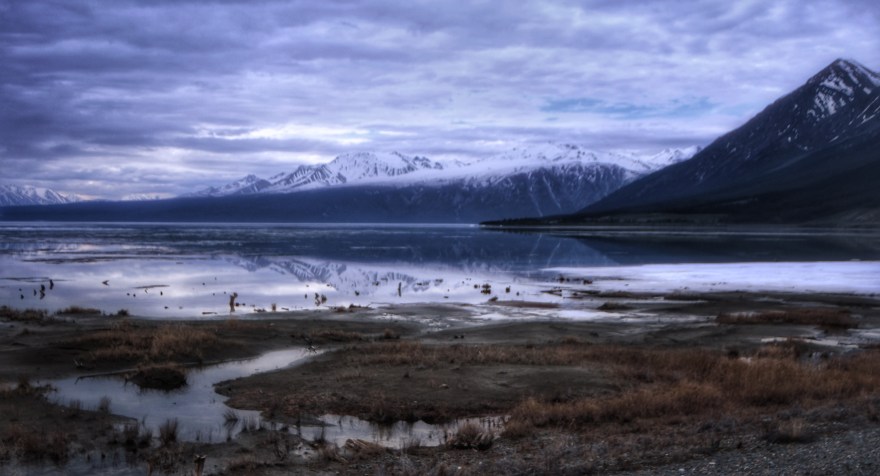
As we made our way back down to Destruction Bay, we rounded corners with endless the endless mountain range welcoming us with open arms.  The bay was still partially frozen, quiet and still save for the distant cry of what sounded like a fox.  

Destruction Bay

After a peaceful overnight at the Caribou RV Park south of Whitehorse we headed to Skagway, AK via Highway #2 – known as the famous Klondike Highway that leads to the Inside Passage.  We essentially drove from the Yukon, through a spit of British Columbia and back into Alaska – all 100 miles from Whitehorse.  

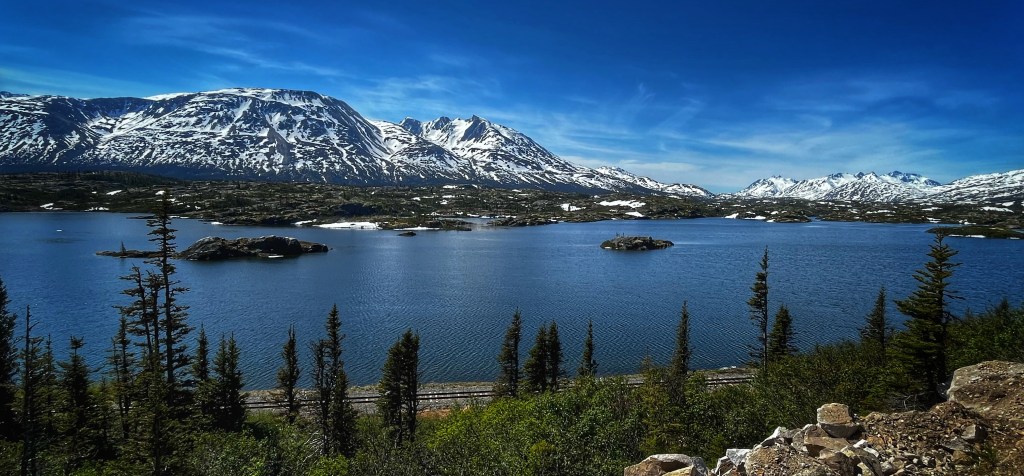
As we headed west the terrain turned into granite outcroppings, more steep cliffs with cascading waterfalls, surrounded by partially frozen ponds.  Granite islands emerged from the waterways, covered in lichen with a smattering of boreal pine creating a very unique ecosystem.   The temperature dropped to the 40’s as we crossed from Canada back into the U.S.  It was an extraordinary site as we headed down the steep slopes into the bay.  

Along the Klondike Highway

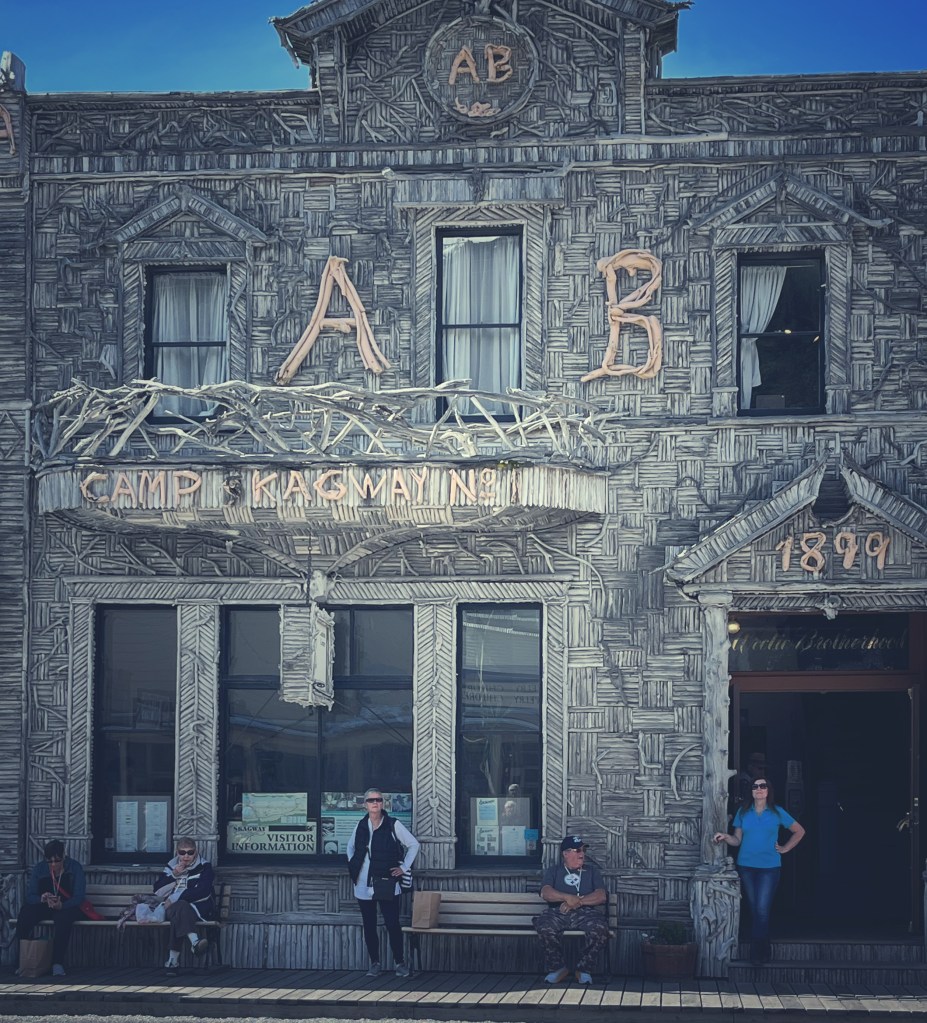
The weather cleared as we parked up in Skagway at the Pullen Creek RV Park; there were four cruise ships up from Glacier Bay in the dock carrying some 12,000 people.  We encountered many of the ice-cream-consuming tourists as we explored Skagway; which turned out to be quite the destination with the Klondike Gold Rush mystique permeating the town, its old buildings giving off an aura of the Wild West.  The Gold Rush was brutal – when you consider that the prospectors had to endure such a savage environment in the hopes of striking it rich.  The museums along with the active, retro train station gave us a good feel of what it must have been like. 

They had an obscene amount of jewelry stores – I suppose because the whole idea is this is where gold is mined?  We did find a few nice art galleries amongst the interminable kitsch and discovered these gems (I go ape for art!).  The mother of the artist was there and said in the original painting of the Laughton Glacier her daughter painted in one of her boots that she had lost during a hike!

Whimsical Watercolors of the Inside Passage

Skagway reminded me a bit of Sisters, Oregon with the traditional facades and galleries and in the summer it is also teaming with tourists.

It’s now 6:00 a.m. and there is a loud hooting of a train then several crash-bangs!  The train has pulled into the harbor to greet the three cruise ships that had arrived – the fourth must be on its way. Either this is normal or they are making up with a post-Covid frenzy. Skagway must make a killing on tourism during this short window.  Come October the bay will start freezing over and the 300 some odd residents of Skagway will be encased in snow and ice until May.  I don’t know how they manage!  

We departed on a stellar warm day and headed out to Carcross, but were diverted several times to take in the scenery. 

We even spotted a pair of brown bears munching on dandelions on the side of the road.  

Brown Bear – ignoring us

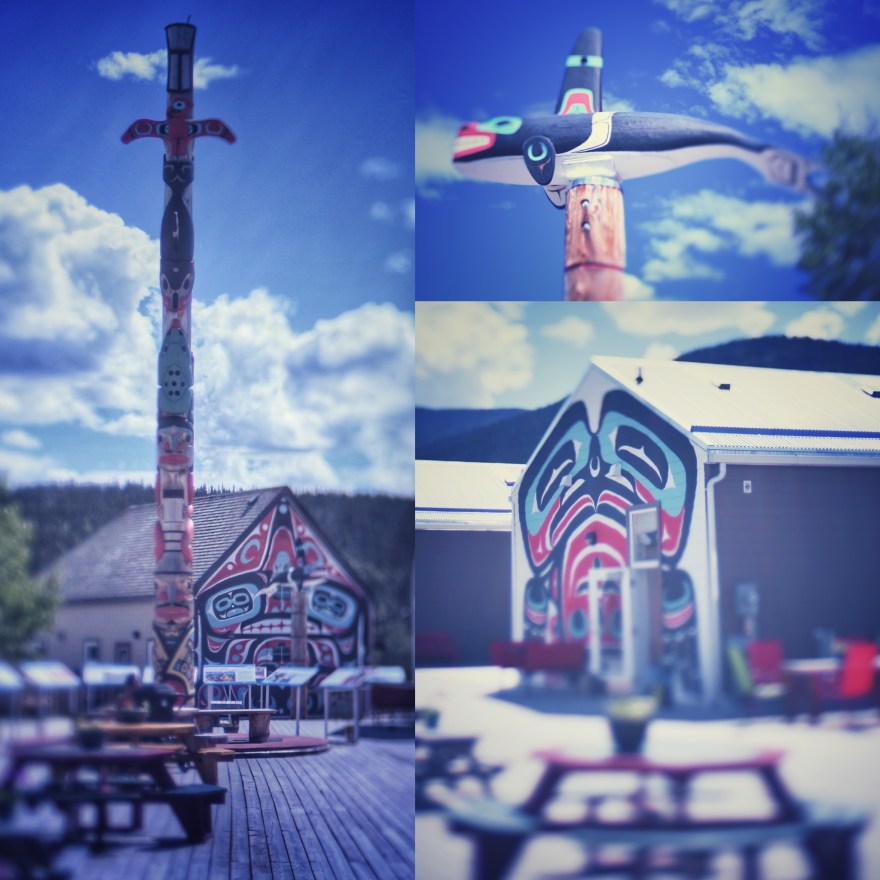
Carcross is a charming town – the name is derived from Caribou Crossing.  The town was built to promote the indigenous tribes with lovely totems and buildings painted in the Tagish First Nations tradition.  The center was designed to represent local artists, but sadly there were only a few shops open.  Otherwise it is a lovely stop along the Klondike Highway.  

Carcross – Tagish First Nations

Mar 5-7 The Grand Canyon

After a rough weather day of being pummeled by sleet, buffeting wind, and massive tumbleweeds that we thought would eat our rig, we reached the Grand Canyon Trailer Village worrying about our pipes freezing as the snow began to fall.  We hooked up the utility lamp to heat up the fresh water tank area and stuffed towels in the bay.  We ran the taps in the middle of the night – so far so good.  By morning we awoke to a carpet of snow and for a moment our worries were swept away by the crystal reflections that accompanied the melt as the sun shot through the blue sky.  

Brrrr!!

The park does a great job with the shuttle service and we walked from our site to the bus stop arriving at Mather Point within a few minutes.  My mind and heart are simply not big enough to embrace this epic visage of a place.  It stuns you into submission at every turn. The cold and the infinite landscape dissipated the usual burn of a long walk. 

The trees were covered with a dusting of snow and you would see on occasion an old and twisted juniper standing guard; a rebel against the elements.  

The conditions were slushy with a dash of ice and if you weren’t careful you could have a nasty spill.  I’m surprised more people don’t actually plummet to their deaths with their cavalier selfies at the cliff’s edge. We stuck with safer options.

Sadly, our dear companion Dave-the-Minion did a runner on the trail.  We tried to find him but came up empty handed with no response from lost and found yet.  We can only hope he has been retrieved by a loving family.  We’ve had him for years and he has been with us on so many journeys.  I hope he didn’t take offense to no longer being the “only one” since we brought baby Yoda (Grogu) into the fold.  

Dave we are going to miss you:(

Cold, tired and equally exhilarated, we had a nice late lunch at the El Tovar Lodge dining room, I had a Navajo Taco which was really satisfying with Indian bread as a base. We picked up a few souvenirs along the way including a book on Navajo rugs as I want to understand the underlying meaning of the designs.  

I managed to squeeze in a few pictures on my dad’s 1977 Pentax; I will be taking BW 35mm Ilford film images as we move around the national parks; I hope to capture those places he never got a chance to get to.  It will be exciting to see the end result! 

We woke up to freezing temps with worse weather on the way.  We decided to go to Yaki point which was spectacular with the new snow and the shifting cotton ball clouds, but we could see the weather system coming in and got caught in it on our way to the visitor center from the Pipe Creek Vista.  It was horizontal snow pelting us as we made our way back to Big B.  We decided the weather was too harsh and socked in to enjoy the rest of our stay so packed up and meandered are way carefully through the park roads.

We left by way of Williams and Flagstaff and drove in blizzard-like conditions along Route 66 until we turned off to Page.  The weather finally broke and ice started peeling off the rig.  The landscape along the Vermillion Cliffs National Monument made for an eye-popping end of the day.  The sky was clear and we thawed out at the Lake Powell Campground – winding down with a classic southwest sunset. Tomorrow will be a rest day and a chance to give the rig a desperately needed clean.

Feb 28 – Mar 3 Alabama Hills by way of Morro Bay

We bid farewell to Santa Rosa but didn’t go across the Golden Gate and headed for San Jose instead to connect with the 101.  It took us a couple of hours to get through the Bay Area traffic and were glad when the 101 finally narrowed.  Otherwise the road was pretty non-descript except for the endless miles of agriculture and vines – this must be a place that supplies grapes to places like Gallo (I’m making that assumption as it looks like a mass production vs carefully cultivated vintages).  We stopped for lunch in Monterey Bay (whipping up a salad and tea in the RV) in the Fort Ord area.  Another beautiful day – we have been so lucky.  We reached Morro Bay about 4:30 – it was warm and we are practically on the beach with a massive haystack rock right on the ocean known as Morro Rock.  It’s really quite something.  I put on my sandals, finally releasing my feet from their winter bondage.  I had to peel down into a blouse as the weather was in the high 70’s; I couldn’t remember the last time I was in warm weather like that! We went for a sunset walk and then sat by the fire with a shot of whiskey – the temperature dropped quickly so we cozied back into the RV to read and further reflect on the day.   

Amazing view from our spot at the RV park

We woke up to a view of the beach and Morro Rock.  As we had a long drive that day to Alabama Hills in Lone Pine we got it together early.  We met up with one of Bob’s friends from his Adidas days and had a nice walk along the waterfront and paused to watch the sea otters lounging by the shore.  It got warm quickly and I changed into my fair weather clothing.  We drove the route to Bakersfield through endless commercial wineries and agricultural area. We heard on the radio that San Luis Obispo had the highest gas prices in the country as we realized when we took a few sips at $5.29 per gallon until we could find cheaper prices!  We stopped off for (cheaper) gas on Highway 46 where the fatal crash that killed James Dean is memorialized.   California had just lifted the mask mandate and it appeared most everyone got the message.  The station had a large shop with “frogs balls” and Route 66 memorabilia even though we weren’t on Route 66…

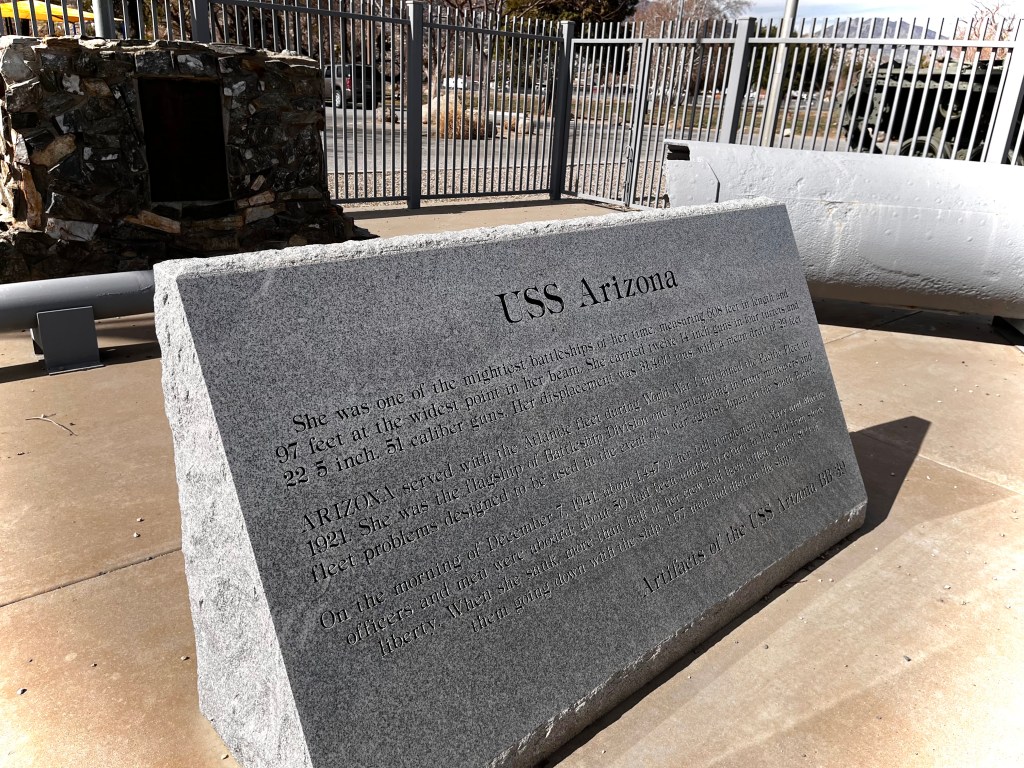
We stopped in a ghost town called Bodfish and they had a USS Arizona memorial of all things with actual artifacts from the ship!  I will be there in April to commemorate my father’s service so was rather excited to discover this gem in the middle of nowhere.  I don’t know what possessed such a remote location to put these artifacts on display – which made it all the more impressive.  

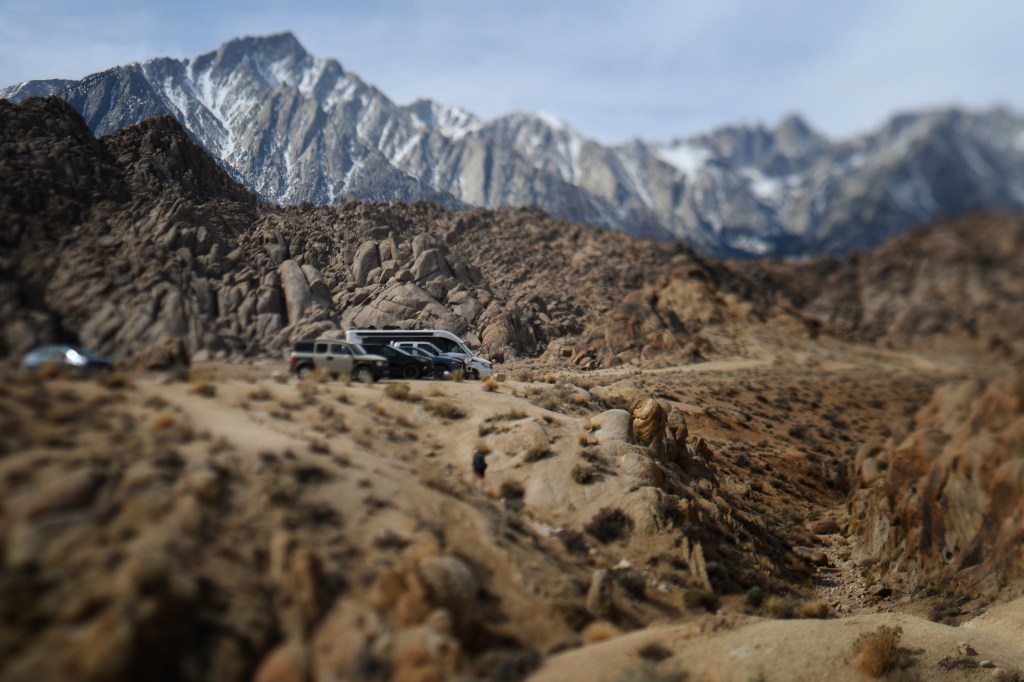
We reached the Eastern Sierra Scenic Byway with it’s basalt rocks tossed all over the valley and cones that could easily be mistaken for recent volcanic activity.  It was barren and we couldn’t figure out what people did for a living outside of working at the power plants or China Lake.  Then the Sierra’s started peaking out as we neared Lone Pine and we got excited when we spotted the first outcroppings of the Alabama Hills while driving along Whitney Portal Road.

We paid $8.00 per night for the Tuttle Creek Campground.  There were not that many people around us.  The place is clean and well organized with pit toilets and a camp host.  The lovely creek was behind us and was the only sound as we watched the sun go down behind the Sierra’s.  We are in a new moon phase and I got up around 2:00 a.m. to see if I could see the Milky Way but there was some cloud cover on the horizon. Otherwise the night skies were clear and I was blessed with a shooting star.  

Night skies at Alabama Hills!

Then we woke up to this view.  

Too cold to get out of bed though

What I love about BigB is we can switch on the 12v heater and as soon as the sun comes up the battery starts charging up again from our solar panels. We had filled up our water tank and have our LP for coffee, heat and the refrigerator.  We are self-contained in this euphoric glamping world.  When dry camping (or boondocking) we read and journal.  I can work on my devices (including the internet if we have signal) and juice them up as needed with the inverter; our solar panels keep us well supplied. After two long days of driving we we are in no rush and can poke around the hills at our leisure #lovinthervlife 

We are at an elevation of 5000 feet and the hills themselves are in walking distance though the walk back turned out to be a couple of miles of uphill terrain and it felt hot even though it was in the 70’s.  The sky was a brilliant blue at this elevation and the sun was equally intense.  I thought about the animals the inhabit the region and their solitude.  

This place and time was like a dream come true, though no, it was really the beginning of a transcendence into a different reality.  The creek by our campsite paid no heed to my toes and ears, yet soothed my ears; the sun was indifferent to my skin – I felt bathed in my entirety by the high Sierra despite the burn.  

It was quiet, solitary much like the Redwoods but more distant, higher with thinner air and the absence of shelter except amongst the towering formations rooted beyond my imagination.  All this while Russia lays siege to the Ukraine, we weep and pray for the people of the Ukraine; we wish them the same solitude, instead of the ragged remnants of what was normal, brought by unnatural moving thunder.  

Inhaling the smoke of our fire, we recede as the sun sets behind the mountain range, exacting and reliable, we can always count on the horizons as if they say at least some things change but are not chaotic.  

We finished the day with one of the oranges from Sonoma – a mixture of citrus and smoke like the many fine wines of the region. 

Day’s End

Alabama Hills last day.

We stopped by the Gunga Din day use area on our way out of the hills. It has a large plaque dedicated to the movie that was filmed along the trail. Every angle of these formations connects in a different way and beckons exploration.  It’s not a long trail unless you go want to go bouldering – then you have infinity at your disposal.  

The Gunga Din Trail

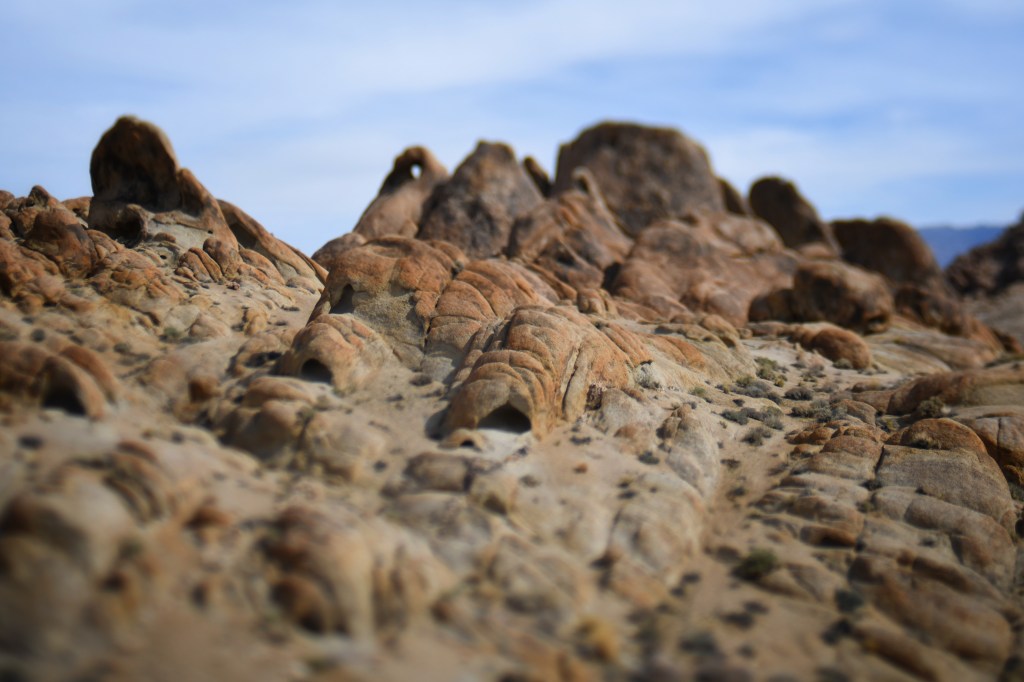
We stopped by the rather touristed Mobius Arch with Mt. Whitney perfectly framed in its portal; was it a chance display by nature or just how we humans interpret it?   The trail was nicely laid out with more formations but these ones had caves honed from the sides and the backdrop of Mt. Whitney was clearer.  The rocks were rounded as if smoothed by an artisan well versed in geometry.  

The boys had to be in the shots of course as they rather liked the Alabama Hills.

We overnighted in Death Valley at Stovepipe (it’s a parking lot with about as much appeal as its name…. complete with generators going).  it was 85 degrees and we were thankful we had decided to stay in Alabama Hills an extra night instead of Death Valley.  It was warm enough so we turned on the generator for a little while and the AC to cool the cabin down.  It was noisy but it worked.  

We have certainly had the extremes – with Mt. Whitney being the highest point and Death Valley being the lowest – it is a bit like the circle of life

Feb 21, 2022 – Bandon, Oregon

Bandon is our first stop on our way to the Southwest in “BigB.” It was windy with passing showers (some pretty intense as there is a cold front coming through the coast). The beach at Bandon never fails to amaze; atmospheric and alien-like. As we had imagined our days would go on this trip we had tea in the rig after our hike (just in time as another front came through!) then stopped in old Bandon for some lunch and our requisite magnet (we have a board and will be collecting magnets at each stop where possible – we may run out of room – we’ll see). I pulled out my Lensbaby Edge 35 lens to get some atmospheric bokeh – it was fun until I couldn’t feel my hands anymore.